Ask five people in your organisation what an "active customer" is and you'll often get five answers. Sales counts everyone with a live contract, finance looks at paid invoices, marketing at who bought something in the past six months. Ownership of definitions resolves this by giving one person or team the final word on what a concept means inside the data. At Impacture we tie that question directly to data definitions and data governance on a governed platform, so the definition is right not only on paper but also technically anchored.
Data-specific definitions of ownership
Ownership of a data definition means one role is responsible for the meaning, the scope, and the changes of a concept as it is captured in the data. That is something different from process ownership or budget responsibility.
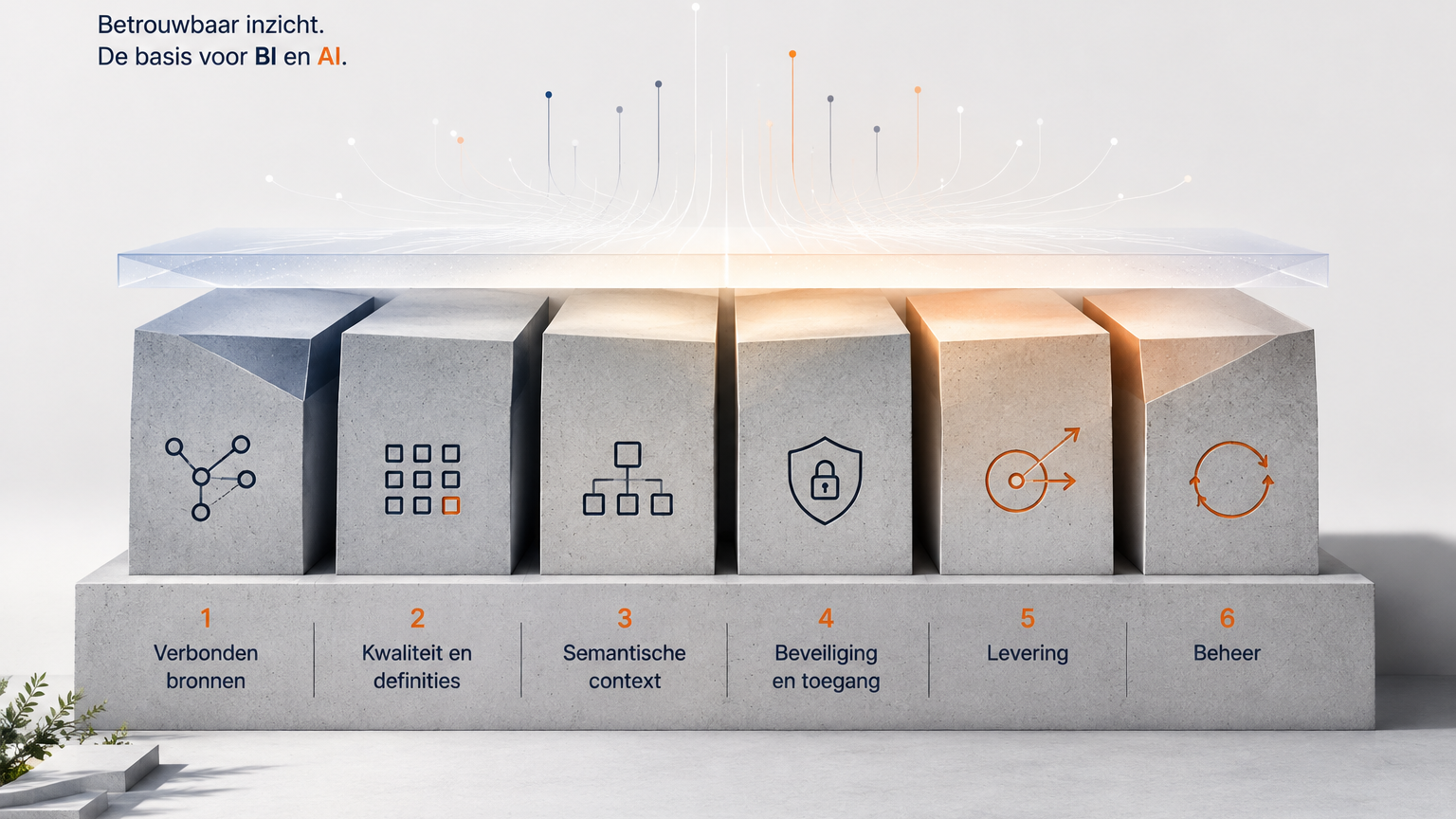
Set this up by naming an owner per core concept (customer, order, active user) who may fix the definition and may refuse when a team wants to add its own interpretation. Pick that owner per definition already during the Business Discovery Workshop, for instance, so the knot is cut before the build begins. Anchor the definition on the Silver Layer (the layer where raw data is cleaned and structured inside a medallion architecture), so every dashboard and every AI application uses the same source.
Ownership of data definitions
A data definition without an owner dilutes on its own. Someone adds an exception, someone else stretches the definition, and after a few months "active customer" means something different in every report.
Prevent this by always routing changes to a definition through the owner, even when the change looks small. In practice we see with clients that a simple rule like "no change without approval from the definition owner" already removes a lot of noise. Document the definition in one central place, not scattered across separate Excel tabs or team notes.
Ownership within data governance
Data governance (the agreements and responsibilities around the management of data) is the framework within which ownership actually works. Without governance, an owner is a name on paper without authority.
Make sure the owner really gets access and say-so over the definition in the platform, not only in a policy document. Tie this to roles and rights, for example via row-level security (security that decides who may see which data at row level), so changes are traceable to the person who approved them.
Why ownership is crucial on a governed platform
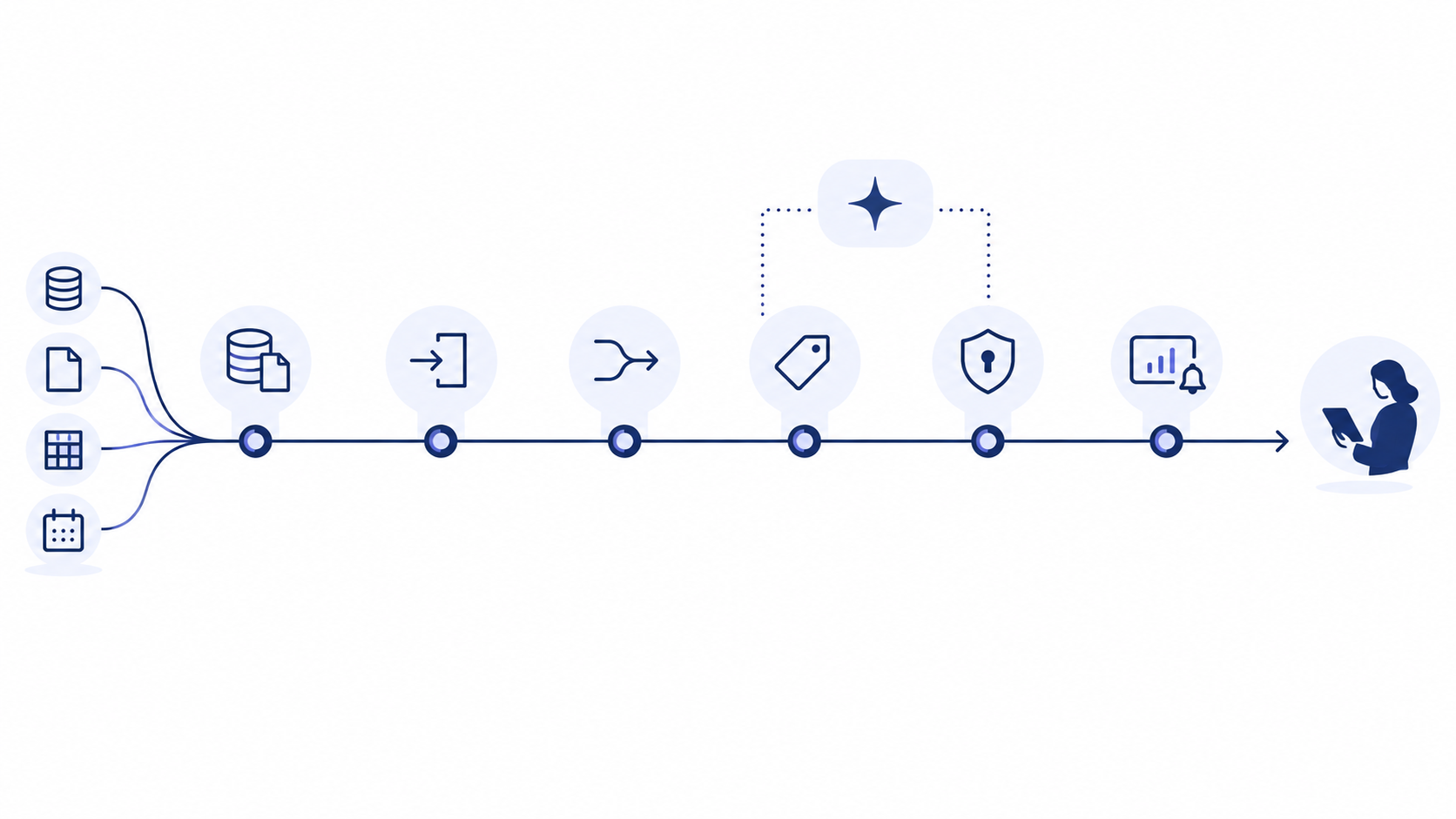
On a governed platform, dashboards and AI agents run on the same underlying layer of data. If the definition of "active customer" shifts, so does the answer of every system that uses that definition.
In a chart you sometimes spot a wrong definition as a kink, but an AI agent simply gives a wrong answer without warning. So assign an owner per definition before you build an AI layer on that data, not afterwards. That saves you from working out later which of the five interpretations the agent actually used.
Patterns of data ownership in practice
One recurring pattern: the department with the most operational knowledge about a concept becomes the owner, not the department that works with the data the most. For a customer definition, ownership often sits with sales or customer service, not with the data analyst who builds the report.
Another pattern is that ownership is split per domain: someone for customer definitions, someone else for product definitions. That works better than one central owner for all concepts, because no one has equal knowledge of everything.
Ownership of definitions versus general ownership
General ownership is about responsibility for a process, a result or a team. Ownership of definitions is narrower: it's specifically about the meaning of a concept as it is captured and used in data.
The difference is that a broken process usually shows itself quickly, whereas a wrong data definition only surfaces once someone starts comparing numbers. So don't treat it as a task division, but as a technical agreement you anchor inside the platform itself.
Ownership of definitions, then, isn't an HR question but a data question: who gets to fix the meaning of a concept, and where do you anchor it so it yields the same answer everywhere. Without that agreement, "active customer" stays a loose term per team instead of one trustworthy source for reporting and AI. Not sure where to start with this kind of definition inside your data? Book a Discovery Call and we'll think along.